Institute News• 20 Oct 2026 • 4 min read • 4 views
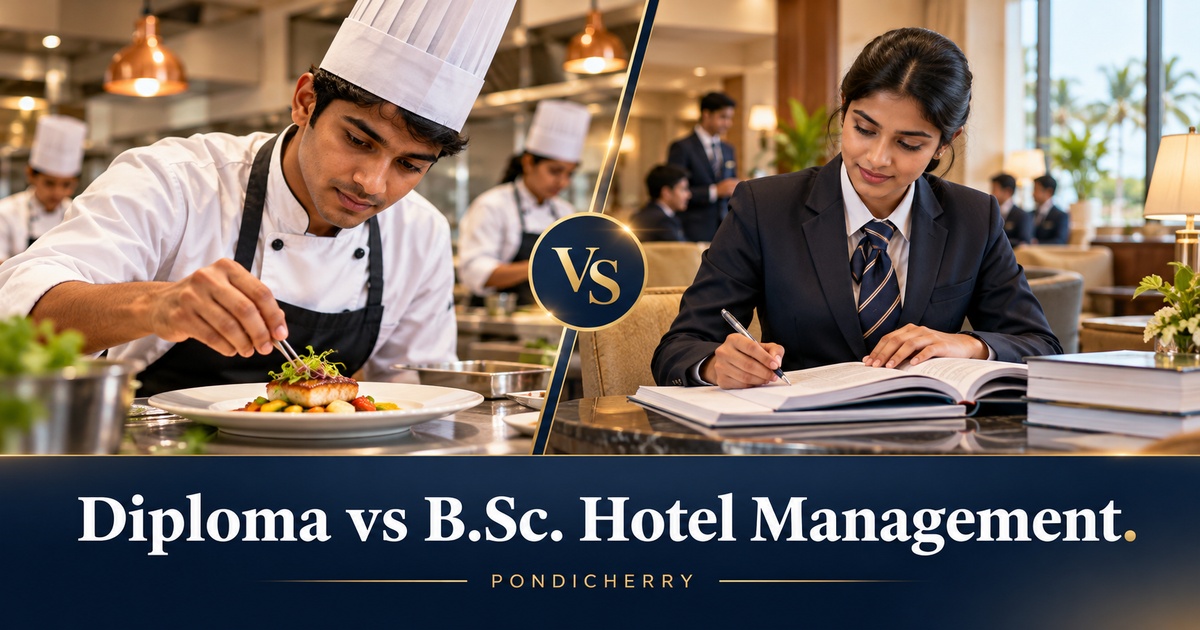
Choose a diploma for shorter, skill-focused hospitality training. Choose a BSc for broader academic knowledge, three years of structured learning and long-term opportunities in hotel operations and management.
The right choice depends on your qualification, career goal, preferred specialisation, available time and education budget.
A Diploma in Hotel Management provides job-oriented training in areas such as food production, bakery, food and beverage service, front office, housekeeping, tourism and hotel operations.
SRISAI Institute in Pondicherry offers multiple hospitality diploma pathways. Eligibility and duration vary according to the selected specialisation, so students should verify the latest course details before admission.
A BSc in Hotel Management and Catering Science is an undergraduate degree covering hotel operations, food production, front office, housekeeping, food service, customer relations and hospitality administration.
SRISAI currently lists its BSc as a three-year program for 12th-pass students, with practical laboratory sessions, industrial training and placement assistance.
Certain diploma programs may accept students after Class 10, while BSc Hotel Management requires Class 12. Exact diploma eligibility can differ between courses and institutions.
Students who have completed 10th can explore eligible diploma or certificate courses. Those who have completed 12th can compare both diploma and BSc options based on their long-term plans.
Diploma courses are generally shorter and concentrate on practical skills required for particular hospitality departments. Duration may vary from a few months to one or two years.
A BSc takes three years and combines practical training with academic subjects, hospitality administration and broader operational knowledge.
Diploma fees depend on the course duration, specialisation, materials and laboratory requirements. A BSc may have a higher total cost because it covers multiple semesters and broader training.
Compare tuition, uniforms, practical materials, examinations, certification and internship expenses. SRISAI does not currently publish a complete fee table online, so request an official breakdown.
Diploma holders can explore entry-level roles in kitchens, bakeries, restaurants, front offices, housekeeping departments, catering companies and resorts.
BSc graduates can pursue operational roles and gradually move towards supervision, administration or management with suitable experience and performance.
Choose a diploma if you want focused practical training, earlier entry into the industry or a specific specialisation such as bakery, food production or front office.
Choose a BSc if you have completed 12th and want comprehensive hospitality education, a recognised undergraduate qualification and wider long-term progression.
The Diploma vs BSc Hotel Management decision should be based on eligibility, career goals, course duration and preferred learning style—not only on fees.
Visit SRISAI Institute in Orleanpet, Pondicherry, compare the available programs and confirm the latest eligibility, syllabus, fees and certification before enrolling.
💡 Tip: Choose a diploma for focused job skills and a BSc for comprehensive hospitality education with wider long-term career progression.
A diploma is suitable for faster, skill-focused training. A BSc is better for students seeking broader education, an undergraduate degree and long-term career progression.
Certain diploma courses accept students after 10th. Eligibility varies by specialisation, so confirm the current requirements with the institute.
SRISAI currently lists its BSc in Hotel Management and Catering Science as a three-year undergraduate program requiring 12th pass.
A BSc can support wider long-term progression, while diploma holders can also build strong careers through practical skills, experience and further education.